







Herbalife, a premier health and wellness company, community and platform, released findings from its latest survey, revealing a clear rise in a wellness culture – the modern phenomenon that emphasizes the active pursuit of holistic well-being through the integration of physical, mental, emotional health – across Asia Pacific (APAC).
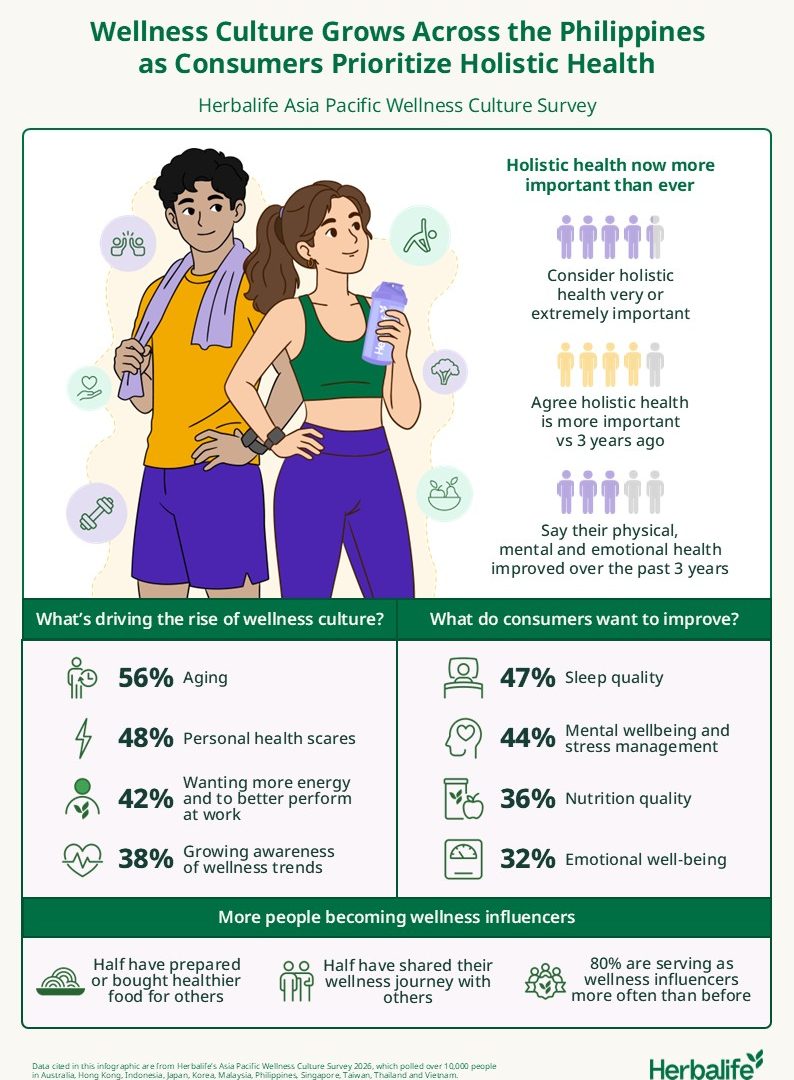
The Herbalife APAC Wellness Culture Survey 2026 showed 91 percent of Filipinos consider holistic health very or extremely important, reflecting a growing shift toward a more balanced and sustainable approach to overall well-being.
The findings also reflect a growing awareness of the need to improve their sleep quality (47%), mental well-being and stress management (44%), nutrition quality (36%) and emotional well-being (32%), to build healthier routines for the long term.
Conducted in May 2026, the survey polled over 10,000 respondents across 11 countries, including, Australia, Hong Kong, Indonesia, Japan, Korea, Malaysia, Philippines, Singapore, Taiwan, Thailand and Vietnam. When asked about the top factors contributing to this trend, Filipinos outlined reasons such as aging (56%), personal health scares (48%) and wanting more energy (42%).
Kinki Lau, General Manager, Herbalife Philippines, said the findings show how Filipinos are redefining what it means to live a healthy life.
“Wellness has become more personal and more intentional. More Filipinos are making conscious choices to care not only for their physical health, but also for their mental and emotional well-being. It’s a positive reminder that lasting health is built through consistent habits practiced every day,” said Lau.
Wellness is becoming an integral part of daily lives
Around half of the APAC consumers surveyed say that the rise of wellness culture has made them more aware of prioritizing their wellbeing. For the majority of APAC respondents , both their variety and frequency of wellness activities increased compared to three years ago. The top wellness activities Filipinos engage in include making healthier food choices (56%), improving sleep habits (55%), and reducing unhealthy habits (49%), indicating that wellness is increasingly embedded in daily routines.
Despite progress, consumers want more support from their social communities
Despite the overall progress made towards achieving better holistic wellbeing, only two in five APAC respondents say their current state of physical, mental and emotional health is better compared to three years ago. Respondents cited the lack of time (39%) and stress or mental load (39%) as key challenges that get in the way of maintaining wellness habits.
With family and friends and social media being named as the top two sources that are most likely to have a positive impact on their health, many consumers are looking for more support from their immediate communities to help them boost their physical (73%), mental (55%) and emotional health (50%).
“The journey to better health doesn’t have to be taken alone. Small acts of encouragement and shared accountability can help people build healthier habits, creating a ripple effect that benefits families and communities, and ultimately helping more people live happier lives,” added Kinki.